


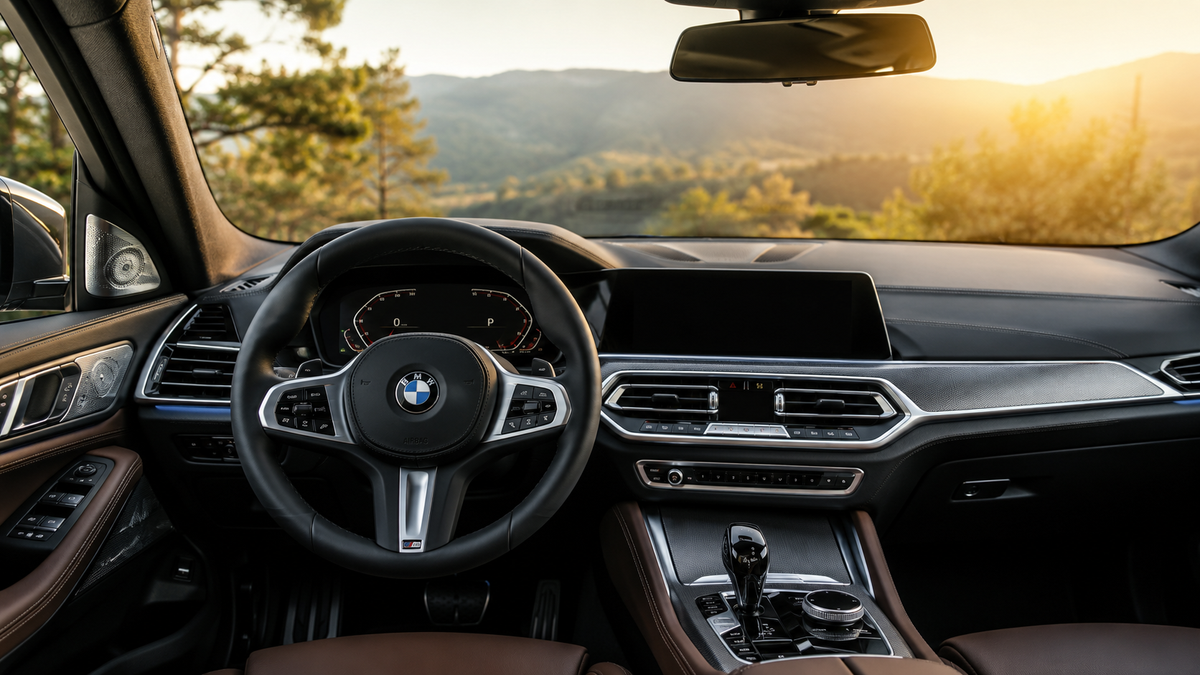
BMW has changed a lot over the years.
The cars became more electronically integrated, audio systems became more complicated, and the gap between a base system and a premium factory option became harder to understand.
But after working across different BMW generations, one thing becomes clear: there isn't one universal BMW audio problem, and there isn't one universal BMW audio upgrade.
The right approach depends on what BMW built, what has aged, and what you actually want to improve.
✔ TL;DR
✔ BMW audio systems have changed significantly across generations, so the same upgrade strategy doesn't automatically apply to every BMW.
✔ Older BMWs often have a different problem than newer cars: the factory speakers themselves may simply be decades old and no longer performing as they originally did.
✔ Newer BMWs can have more complex electronics and multiple factory audio configurations, making exact vehicle and audio-system fitment even more important.
✔ A BMW-specific upgrade works best when it improves the part of the system that is actually limiting your listening experience, rather than rebuilding everything unnecessarily.
✔ The best place to start is with your exact BMW, factory audio system, and the problem you're trying to solve, not simply the generation or model name.
Quick Answer
The biggest lesson from working across different BMW generations is simple:
BMW audio has never been one-size-fits-all.
An E46, E39, F10, F30, G20 or G05 may all carry the BMW badge, but their audio systems can be fundamentally different.
Factory speaker layouts, audio configurations, electronics, amplifiers, connectors and available upgrade paths have all changed over time.
That means the first step in upgrading any BMW should be understanding what is actually in the car.
For older BMWs, the issue may be aging factory speakers. For newer BMWs, it may be the limitations of the factory speakers despite having a more sophisticated audio architecture. And sometimes the system is perfectly capable, but the owner simply wants stronger low-end performance.
The upgrade should follow the problem.

BMW Audio Changed More Than the Cars Did
It's easy to think of BMW audio as a simple progression:
Old BMW → basic audio
New BMW → better audio
Reality is considerably less convenient.
BMW has used different audio configurations across generations, sometimes with multiple systems available within the same chassis. Even a single BMW model can have different speaker layouts, amplifiers and factory audio options depending on its production year and equipment.
That's why model name alone isn't enough.
A 5 Series isn't simply a "5 Series audio system." An E39 and an F10 are completely different starting points. Even two cars from the same generation may need different approaches depending on their factory configuration.
The same principle applies when choosing an upgrade.
A speaker that physically fits isn't necessarily the correct speaker for the electrical and acoustic environment of the car.
That's one of the reasons BMW-specific speakers are different from universal aftermarket speakers.
The vehicle has to come first.
 Older BMWs Have a Different Kind of Audio Problem
One of the most interesting things about older BMWs is that their audio systems don't necessarily need to be "modernized."
Sometimes they simply need to be replaced.
Take an E46.
These cars were produced from 1999 to 2005, which means some original factory speakers have now spent more than two decades inside a vehicle dealing with heat, cold, vibration and normal use.
The car may still drive beautifully.
The engine may be healthy.
The interior may have been restored.
The suspension may have been refreshed.
And the speakers may quietly be falling apart.
That's why upgrading an older BMW isn't always about chasing some futuristic sound.
Sometimes you're simply bringing the audio system back to a level that matches the rest of the car.
Our BMW E46 complete audio upgrade guide goes deeper into the different factory configurations and upgrade options for that platform.
The same principle applies across other older BMWs. E38, E39, E60/E61, E83, E85/E86 and other classic platforms are still supported for various Bavsound applications, but the exact products available depend on the vehicle.
 Newer BMWs Have a Different Problem
Newer BMWs aren't necessarily struggling because everything is old.
In many cases, the opposite is true.
The electronics are newer and more integrated, but the factory speakers can still be the component that limits the overall listening experience.
This is particularly interesting on cars with upgraded factory audio systems.
You can have a BMW with Harman Kardon, a dedicated amplifier and a considerably more sophisticated factory audio architecture, and still find yourself thinking:
"This should sound better than it does."
That's because an amplifier can only do so much with the speakers connected to it.
The F25 and G01 X3 are a good example. Both generations were available with different factory audio configurations, and their underlying audio architectures aren't identical.
So "I have Harman Kardon" doesn't automatically answer the question of whether an upgrade makes sense.
It tells you where you're starting.
It doesn't tell you where the system can go.
The Factory Audio System Matters More Than the BMW Badge
This is probably the biggest lesson.
When someone says:
"I have a BMW 3 Series."
That's useful.
But it isn't enough.
We still need to know:
- Which generation?
- Which chassis?
- What year?
- Which body style?
- Which factory audio system?
- What are you trying to improve?
The difference between Base, Hi-Fi and Harman Kardon can change the architecture of the system and the appropriate upgrade path.
That's why the BMW Base vs. Hi-Fi vs. Harman Kardon guide is useful before making an upgrade decision.
The same logic applies to model-specific systems.
For example, the F10 5 Series had multiple factory audio configurations across its production run, which makes identifying the exact system important before choosing an upgrade.
The lesson is simple:
Don't shop for your BMW by model name alone. Shop for the actual audio system inside it.
Plug-and-Play Means More Than Having the Right Connector
 Another thing that becomes obvious across generations is that "plug-and-play" is often misunderstood.
It doesn't simply mean:
"The connector fits."
A BMW-specific speaker needs to make sense within the vehicle's electrical and physical environment.
That includes things such as:
- Mounting location
- Speaker dimensions
- Connectors
- Impedance
- Factory amplifier characteristics
- Speaker configuration
- Available installation space
- The acoustic environment of the vehicle
That's why a universal speaker with an adapter isn't automatically equivalent to a speaker engineered around the BMW application.
With Stage One, the goal is to replace compatible factory speakers while retaining the factory architecture rather than turning the car into a custom audio installation.And that philosophy becomes even more important as BMW systems become more integrated.
You Don't Always Need to Rebuild the Entire System
One of the biggest mistakes we see with BMW audio upgrades is assuming that improving the system means replacing everything.
It doesn't.
If the main problem is clarity, detail, vocals or overall speaker performance, a speaker upgrade may address the problem directly.
That's where Bavsound Stage One comes in.
Stage One is designed to replace the factory speakers in compatible BMW applications while working with the factory audio architecture.
If the speakers already sound good but the system feels weak underneath the music, that's a different problem.
That's where Bavsound Ghost comes into the conversation.
Ghost focuses on the factory underseat woofer portion of compatible BMW systems, improving low-frequency depth, impact and control.
The two upgrades aren't competing answers to the same question.
They're addressing different parts of the system.
Our Stage One vs. Ghost guide breaks down that distinction in more detail.
💡 Bavsound Insight
The best BMW audio upgrade isn't necessarily the biggest one. It's the one that removes the limitation you actually hear.
The Upgrade Path Can Be Different for Every Generation
There's no universal sequence that every BMW owner needs to follow.
An older BMW with deteriorated factory speakers may benefit enormously from replacing those speakers first.
A newer BMW owner may already have a perfectly functional speaker system but want more low-end performance.
Another owner may be happy with both and simply want to reduce vibration or resonance after upgrading.
That's why the upgrade path should follow the problem.
If the BMW sounds thin, flat or unclear
Start by looking at the speakers.
If the BMW sounds clear but lacks low-end impact
Look at the underseat woofer portion of the system, where supported.
If the system sounds good but the cabin has unwanted vibration or resonance
Sound deadening may be useful as a refinement rather than the first upgrade.
If you've already upgraded one part of the system
Look at what limitation remains instead of automatically replacing something you've already improved.
For example, owners who have already installed Stage One and want more low-end can look at what to upgrade after Stage One.
Likewise, if Ghost has already transformed the low end but the rest of the system still feels factory, what to upgrade after Ghost is the more relevant next question.
 Older Doesn't Mean Worse. Newer Doesn't Mean Better.
This is probably the most important conclusion.
An older BMW can still have a fantastic audio experience.
A newer BMW can still have an audio system that leaves you wanting more.
Age alone doesn't determine how good the system is.
The factory design, audio configuration, condition of the components and what you expect from the system all matter.
An E39 with fresh speakers can be far more enjoyable than an untouched newer system that doesn't meet its owner's expectations.
Likewise, a newer BMW doesn't necessarily need a dramatic custom installation simply because its electronics are more complicated.
The goal isn't to make every BMW sound the same.
It's to make that BMW sound better.
The BMW Owner Has Changed, Too
There's another lesson that has nothing to do with speakers.
BMW owners today are keeping their cars longer.
An older BMW that might once have been replaced by the next generation is increasingly becoming a long-term ownership project.
That changes the way people approach upgrades.
They're not necessarily trying to make an E46 sound like a 2026 BMW.
They're trying to preserve what they love about the car while fixing the things that have aged.
That's why a BMW-specific, integrated upgrade can make so much sense.
You don't have to erase the character of the car to improve it.
You can keep the factory controls, factory locations and familiar driving experience while improving one part of the car that no longer meets your expectations.
There Is No Single "BMW Sound"
After working across different generations, that's perhaps the biggest takeaway.
There isn't one BMW audio system.
There are generations.
There are chassis.
There are factory configurations.
There are different speaker layouts.
There are different amplifiers.
And there are completely different owner expectations.
So the question shouldn't be:
"What's the best BMW audio upgrade?"
It should be:
"What's limiting my BMW's audio system right now?"
Once you answer that, the upgrade decision becomes much easier.
If you're unsure where your BMW fits, the Build Your Kit tool is the best place to start. Enter your vehicle details and see which upgrades are actually available for your specific application.
And if you're still unsure, email support@bavsound.com with your VIN and we'll help you identify the right combination.
FAQ
Does every BMW generation use the same type of audio system?
No. BMW changed its audio architecture, speaker configurations and factory options significantly across generations. Even cars within the same model range can have different factory systems.
Are older BMWs worth upgrading?
Absolutely. In many older BMWs, the factory speakers have simply aged significantly over time. Replacing them can make a substantial difference without changing the character of the car.
Do I need to replace my BMW's head unit to improve the sound?
Not necessarily. A speaker-focused upgrade can improve the system without replacing the factory head unit or controls. The appropriate approach depends on the specific BMW and factory audio configuration.
Is Stage One or Ghost better?
Neither is universally "better." Stage One focuses on the main speakers and improvements such as clarity, detail and overall sound quality. Ghost focuses on low-frequency performance through the underseat woofers on compatible applications. Stage One vs. Ghost explains the difference.
How do I know which upgrade fits my BMW?
Start with your exact model, year, chassis and factory audio configuration. The Build Your Kit tool will show the compatible options for your vehicle.
Key Takeaways
✔ BMW audio systems have evolved considerably, so different generations need different approaches.
✔ Older BMWs often benefit simply from replacing aging factory speakers.
✔ Newer BMWs can have sophisticated factory electronics while still being limited by their speakers.
✔ Stage One and Ghost address different parts of the audio system, so the right choice depends on what you actually want to improve.
✔ The best BMW audio upgrade starts with the exact vehicle and factory audio configuration, not a generic recommendation.
Ready to Find the Right Upgrade?
Use the Build Your Kit tool or email support@bavsound.com with your VIN and we will walk you through the right combination.
Share:
The Most Common Reasons BMW Owners Order the Wrong Audio Kit