


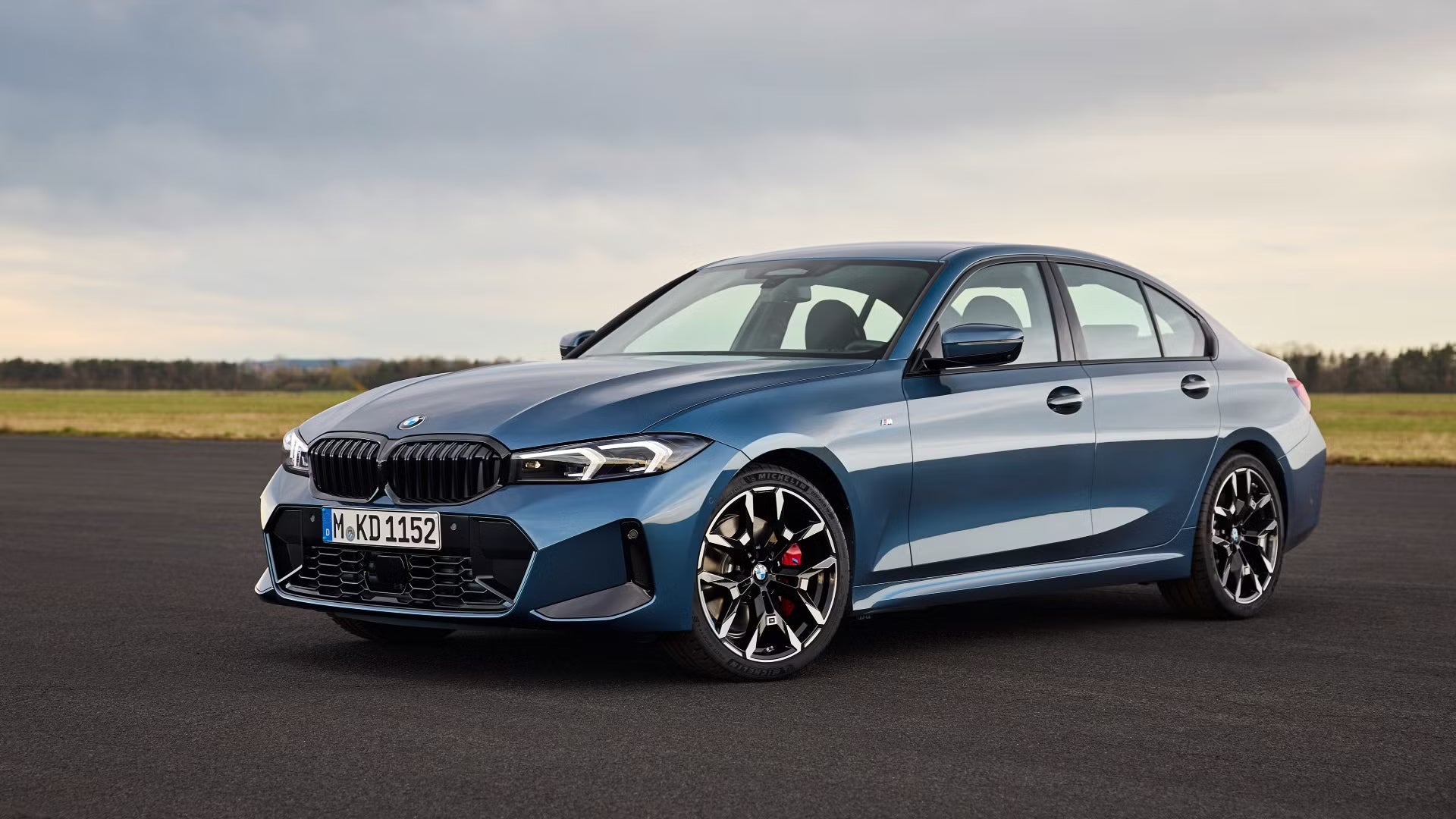
The short answer: Your G20's factory audio, even with Harman Kardon, prioritizes fuel efficiency and weight savings over actual sound quality.
Upgrading to Stage One speakers and Ghost underseat subwoofers transforms the experience while keeping every factory feature intact. No coding. No error messages. No regrets.
I need to say something that might sting a little: BMW's G20 and G80 audio systems aren't as impressive as the rest of the car.
I know. You paid $50k-$80k for a 330i, M340i, or M3. The iDrive is gorgeous. The handling is telepathic. The inline-six sounds like it was engineered by people who actually care. But the speakers? They're fine. Just... fine.
And "fine" doesn't cut it when you're spending that kind of money on a driver's car.
Here's what nobody tells you at the dealership: BMW (and honestly, every car manufacturer) treats the audio system as a cost center, not a performance part.
They'll spend $5,000 engineering the perfect exhaust note but spec $12 paper cone speakers because most buyers won't notice, or won't complain loud enough to matter.
Even the $875 Harman Kardon upgrade uses lightweight speakers optimized for efficiency, not fidelity. You get more power and a couple extra drivers, but the fundamental problem remains: thin midbass, harsh highs at volume, and a soundstage that feels like it's coming from your dashboard instead of surrounding you.
If you've ever thought "this should sound better," you're not crazy. It should.
What Makes the G20/G80 Audio Situation Unique
The G-chassis generation (2019-present for the G20 3-Series, 2021+ for the G80 M3) is complicated in ways the older BMWs weren't. Everything runs through iDrive 7 or 8.5. The digital gauge cluster, the backup camera, the safety chimes, it's all integrated.
This creates a real problem for traditional aftermarket upgrades. Cut the wrong wire or bypass the factory amp incorrectly, and you're looking at error messages, lost functionality, or worse, a check engine light because the car thinks a speaker is a critical safety component. (Yes, really. Modern BMWs are neurotic like that.)
So when people say "you can't upgrade a G20 without major work," they're half right. You can't use the same hack-and-splice methods that worked on an E46 or E90. But you absolutely can upgrade if you do it intelligently.
The key is working with the factory system, not against it.

What Actually Needs to Upgrade (and What Doesn't)
Here's where most people get it wrong. They assume you need to:
- Replace the factory amplifier ($1,200+ and weeks of labor)
- Rewire the entire car (unnecessary and risky)
- Add a DSP to "fix" the signal (complicates everything)
- Accept that some features will stop working (hard pass)
None of that is true if you choose the right components.
What actually matters:
1. The speakers themselves
Factory BMW speakers, both base and HK, use paper cones and weak magnets to save weight. They distort under load, lack midbass punch, and fatigue your ears on long drives. Replacing them with properly engineered speakers is 80% of the improvement.
2. Low-frequency support
The G20's door speakers are physically incapable of reproducing real bass. They can't move enough air. You need a dedicated subwoofer, but it has to integrate seamlessly, or it'll sound like a teenager's Civic at a stoplight.
3. Compatibility with factory amplification
Both the base system and the Harman Kardon amp are actually decent at what they do—if you give them speakers that can handle the power cleanly. You don't need to replace the amp. You need speakers that work with it.
The Upgrade That Actually Makes Sense
After hundreds of G20 and G80 installs, here's what works without compromise:
Stage One Speakers
These are plug-and-play replacements for every speaker location in your G20 or G80. They use the factory mounting points, factory connectors, and factory amplifier. No cutting. No splicing. No adapters that introduce resistance and degrade sound quality.
The difference is in the engineering. Proprietary neodymium magnets, woven fiberglass cones, butyl rubber surrounds, and silk composite tweeters specifically for the acoustic environment of a G20's door panel. They're not trying to be universal fit-anything speakers. They're purpose-built for this exact car.
The result: tighter midbass, clearer highs that don't shatter at highway speeds, and a soundstage that finally matches the quality of everything else in the cabin.

Ghost Underseat Subwoofers
Here's the thing about subwoofers in a G20: you don't have trunk space to waste, and you definitely don't want a giant box rattling around back there.
The Ghost Subwoofers slide under the front seats—completely hidden, completely integrated. They're powered, so they draw from the factory subwoofer signal (yes, even the base system has one). The factory amp doesn't know anything changed. iDrive doesn't throw a fit. The car just suddenly has actual low-end extension.
Not the boomy, one-note bass you get from cheap subs. Controlled, musical bass that fills in what the door speakers can't physically reproduce. You'll hear kick drums, bass guitars, and the low-frequency details in orchestral tracks that the factory system just gives up on.

What You Keep (Spoiler: Everything)
This is the part that matters if you actually daily drive your G20 daily instead of just taking photos of it.
You retain:
- Full iDrive 7/8.5 integration (no error messages, ever)
- All steering wheel controls (volume, track, source)
- Fader and balance control (most "upgraded" systems lose this)
- Factory backup camera and parking sensors (they run through the amp)
- Every safety chime and alert (blind spot, lane departure, seatbelt)
- Your factory warranty (plug-and-play means no modifications to void coverage)
- The OEM aesthetic (nothing visible changes inside the cabin)
You know what you don't keep? The nagging feeling that your $60,000 BMW sounds worse than your buddy's Mazda3 with the Bose system.
The Myths People Keep Repeating
"You have to replace the factory amp to get good sound."
Nope. The factory amp, especially the HK version, has plenty of clean power. The problem was never the amplifier. It was always the speakers not able to use that power effectively.
"Aftermarket speakers will throw error codes."
Only if you use cheap adapters or speakers with the wrong impedance. Proper plug-and-play components with matched impedance curves work flawlessly with BMW's CANbus system.
"You need sound deadening to make aftermarket speakers work."
Sound deadening helps (and we do recommend it), but it's not required.
"This will void my warranty."
Plug-and-play installations don't modify the vehicle in any way that would void BMW's factory warranty. You're not cutting wires, drilling holes, or altering factory components. Everything reverses in 20 minutes if you ever need to.
What It Actually Sounds Like
I'm not going to tell you it sounds like a $10,000 custom system. It doesn't. But it sounds like what a $60,000 BMW should have come with from the factory.
Vocals sit in the center of the windshield instead of coming from the door panel. Highs are crisp without being harsh, you can actually turn the volume up on the highway without wincing. The midbass has punch and definition instead of that muddy, one-note thump.
And the Ghost Subs? They disappear. You don't "hear" the subwoofer. You just notice that songs suddenly have a foundation. The low E string on a bass guitar sounds like an instrument instead of a suggestion. Kick drums have weight. Movie soundtracks in CarPlay have an actual impact.
It's the difference between listening to your music and listening through it.
The Install (Easier Than You Think)
If you're moderately handy, this is a Saturday afternoon project. Door panels on the G20 come off with basic trim tools. Speakers are held in with three screws. The Ghost subs slide under the seats and plug into the factory harness.
If you'd rather not DIY it, any competent shop can do the full install in 2-3 hours. We're talking $200-$300 in labor, not the $1,500+ you'd pay for a custom amp and DSP integration.
The point is: this isn't a commitment. It's a reversible upgrade that takes less time than getting your oil changed.

Who This Is For (and Who It Isn't)
This upgrade is perfect if you:
- Want dramatically better sound without the complexity of a custom install
- Actually drive your G20/G80 and care about the daily experience
- Don't want to see or think about the upgrade once it's done
- Value keeping all factory features and warranty coverage
- Listen to a wide range of music and want a balanced system
This probably isn't for you if:
- You're chasing SPL competition numbers (get a trunk full of subs)
- You want to impress people at car meets with visible modifications (this is invisible)
- You're happy with the factory sound (genuinely, some people are, and that's fine)
- You're planning to lease-return in six months (just live with it)
Why This Matters More Than You Think
Look, I get it. Suspension, tires, brakes, those are the "serious" upgrades. Audio feels like a luxury.
But here's the thing: you're in your car for hours every day. Commuting. Road trips. Errands. The quality of that experience compounds over time. A better sound system doesn't just make your music sound better. It makes being in your car better.
And if you're going to spend 10+ hours a week in a G20, you might as well make those hours as enjoyable as possible.
The factory system was good enough not to embarrass BMW. The Stage One setup is good enough that you'll actually look forward to your commute.
That's not nothing.
TL;DR
The G20 and G80 are exceptional cars, let down by cost-conscious audio engineering. But unlike the old days, you don't have to gut the interior and void your warranty to fix it.
Stage One Speakers and Ghost Underseat Subwoofers give you 90% of what a full custom system would deliver, at a fraction of the cost and complexity. You keep everything that makes the G20 great while fixing the one thing that wasn't.
No error codes. No lost features. No visible changes. Just better sound every single time you turn the key.
And honestly? That's exactly how it should be.
Share:
Amp First or Speakers First? Let's Settle This
What Should I Upgrade First in My MINI? Here's What Actually Works
1 comment
Great read!! Now where can I get the proper speakers and sub so I can diy my daily for improved sound!!