


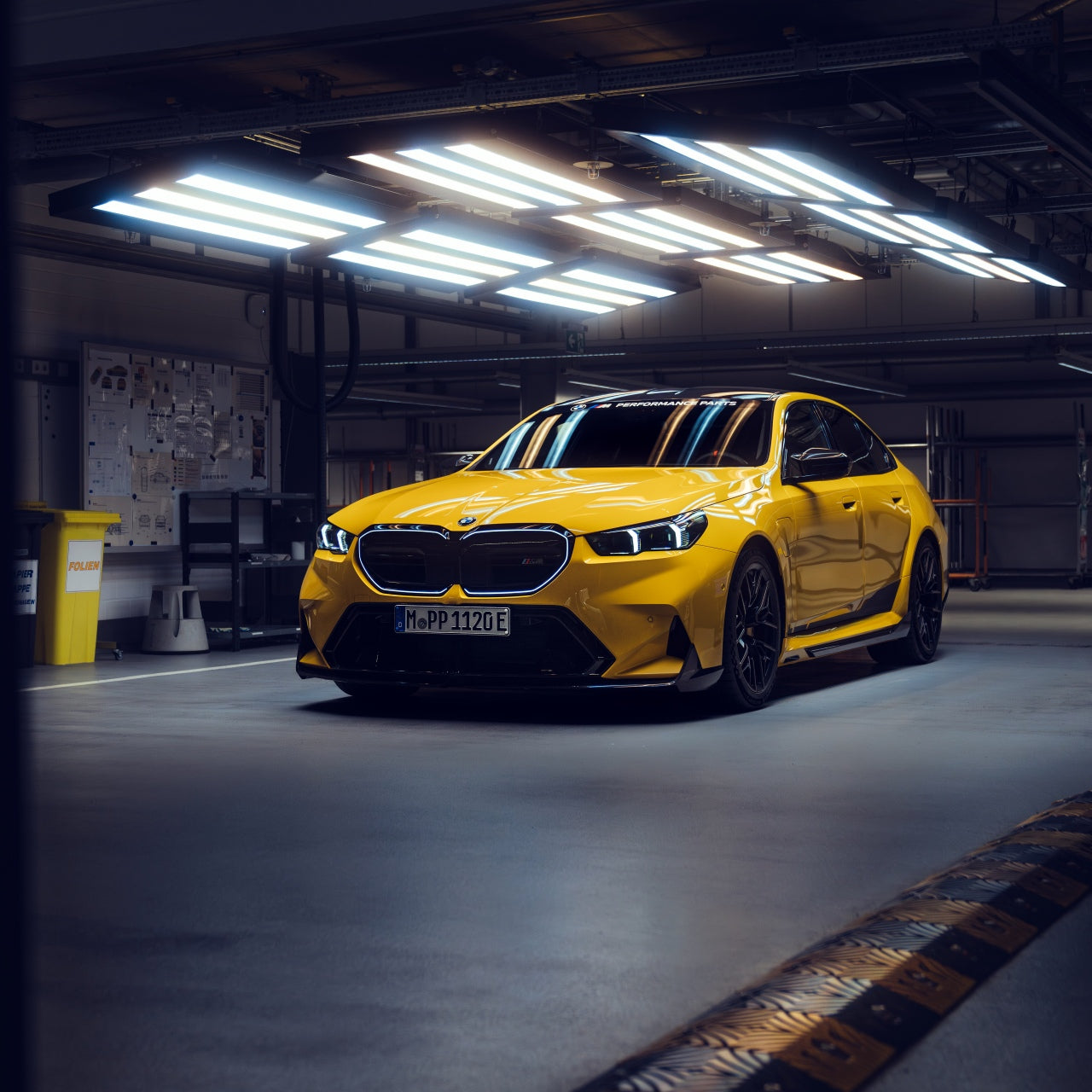
At some point during the BMW configuration process, you will land on the audio page.
There will be a few options. A base system is included in the price. A Hi-Fi upgrade for a modest amount. And Harman Kardon, sitting at the top of the list at somewhere between $800 and $1,500 depending on the model, promises a premium audio experience worthy of the car around it.
You have about thirty seconds to decide. You are already deep into a configuration that costs fifty thousand dollars or more. The audio option feels like a rounding error relative to everything else on the page.
So you tick the box. Or you do not. Either way, you decide without nearly enough information to make it well.
This post is the information you should have had before you got there.
What BMW's Audio Options Actually Are
Before deciding whether HK is worth it, it helps to understand what each option genuinely includes. BMW's naming is less transparent than the configurator implies, and two cars can both say "Harman Kardon" on the window sticker and be running completely different hardware underneath.
The base system on most US-market 3, 5, and X Series BMWs is the S676A Hi-Fi. Here is what that actually means in practice:
- 9 speakers
- 8-channel trunk-mounted amplifier
- Tweeters in the A-pillars, a center dash midrange, door speakers front and rear
- Real amplification, not just a head unit driving passive speakers
It is not exciting. But it is a functional starting point with more hardware than most people realize they already have.
The Harman Kardon system on those same larger chassis cars is the S688A Surround Sound, and the difference is genuine:
- 16 speakers distributed throughout the cabin
- 10-channel amplification
- Up to 600W maximum output
- Fiber optic signal transmission
- Logic 7 DSP spatial processing
That is a meaningfully different piece of hardware, and the gap in listening experience is real.
Here is the part BMW does not advertise prominently. On smaller chassis cars, the 1 Series, 2 Series, and some compact models, the Harman Kardon option is the S674A, which is a considerably more modest system.
It uses the same 2-ohm woofers as the standard Hi-Fi, runs through a similar 8-channel amp, and the performance delta over the base system is small.
The badge says Harman Kardon. The hardware says Hi-Fi with different coding. For buyers of those models, the HK premium is genuinely hard to justify on specs alone.
If you are configuring a 3 Series, 5 Series, X3, or X5, you are getting the S688A, and the gap is real. If you are configuring a smaller model, check your VIN option codes before assuming the HK badge means the same thing it does in a larger car.

Is the Harman Kardon Worth the Money at Order?
The honest answer has two parts, and they point in different directions depending on who you are.
For passive listeners, people who have music on in the background rather than listening critically, HK at the point of order is good value. The S688A is a more complete system baked into the car from day one.
More speakers in more positions, a more capable amplifier, fiber optic signal path. The resale premium on HK-equipped cars is modest but real. If you know you will never touch the audio after delivery, tick the box on a larger chassis car and move on.
For anyone who actually cares about how music sounds, the picture is more complicated. The S688A is the best factory system BMW offers at standard specification.
It is still a factory system, engineered to a price point, tuned for mass-market preferences, and constrained by the same OEM amplifier limitations as every other car coming off the production line.
Forum owners who have lived with both describe the HK system as getting them to an acceptable level. The aftermarket upgrade is what got them somewhere they did not expect.
The step from factory HK to a properly upgraded system is larger than the step from base Hi-Fi to HK. That is worth sitting with for a moment. You are paying $800 to $1,500 to get closer to good. You are not paying to get to great.
The strongest argument for ticking the box anyway: HK-equipped BMWs have speaker positions that base cars sometimes lack. More speakers in more locations means a more complete upgrade path later.
When you eventually replace the factory HK drivers with higher-quality components, you are working with a cabin that was already designed for full speaker placement. That foundation matters.
The Thing Nobody Mentions at the Dealership
There is a conversation that rarely happens in the showroom, and it is the most useful one for anyone who genuinely cares about how their car sounds.
The factory audio system, whichever one you choose at configuration, is the starting point. Not the destination.
BMW designs its audio systems to satisfy the broadest possible range of buyers, to pass showroom demos, and to fit within tight production cost targets.
Those are legitimate engineering goals. They are just not the same as the goals of someone who wants their morning commute to sound like a good concert.
The difference between a factory HK system and a properly upgraded system in the same car is not incremental. It is categorical. Owners who have done both upgrades describe the aftermarket step as transformative in a way the factory options never were.
None of this means skipping HK at order. It means understanding what you are buying. You are buying the best factory starting point BMW offers, not the end state.

What the Right Upgrade Path Looks Like After Delivery
Whether you configure with HK or take delivery with the standard Hi-Fi, the upgrade path is identical, and the products are designed for your car.
If you ordered HK (S688A), your system arrives with 16 speakers, Logic 7 DSP, and a capable amplifier architecture already in place.
The weakest links are the speaker cone materials (paper drivers and stamped steel baskets built to a price point) and the DSP tuning, which prioritises surround width over accurate stereo imaging.
The Stage One Speaker upgrade replaces the front drivers with woven fiberglass and silk composite components matched exactly to your system's impedance. Plug-and-play fitment, no cutting, no coding. The improvement is immediate.
If you took delivery with the base Hi-Fi (S676A), the starting point is lower, but the path is the same. The Stage One upgrade works just as cleanly with the Hi-Fi system, and the before-and-after delta is arguably more dramatic because the baseline is lower. You did not miss much by skipping HK at order.
From either starting point, the next steps are the same:
- The Ghost Underseat Subwoofers fill the sub-80Hz range that BMW's door woofers consistently leave empty. Factory underseat fitment, no modification, nothing visible changed.
- The Revenant Pro Amplifier removes the ceiling from the whole system, delivering up to 200% more output at normal listening volumes with significantly less distortion.
HK gets you a better starting position. The aftermarket upgrades are where the real improvement lives, regardless of which factory system you started with.

The One Piece of Advice Worth Taking Into the Configurator
If you are configuring a 3, 5, or X Series and you care about how your car sounds: tick the HK box.
Not because it gives you the system you ultimately want, but because it gives you the best factory foundation available, the most complete speaker placement, and a more satisfying starting point for the upgrade that will eventually make you genuinely happy with your audio.
If you are configuring a smaller BMW and the HK option is the S674A, the hardware gap over base Hi-Fi is narrow, the price premium is real, and the same aftermarket upgrades work just as well from a Hi-Fi starting point.
Save the money and put it toward the Stage One upgrade after delivery instead.
And if you are already past the configurator, already driving the car you bought, wondering whether you made the right call, it does not matter much either way. Both starting points lead to the same place. The upgrade exists for exactly where you are now.
Find out what is available for your specific BMW at Bavsound's vehicle selector. MINI owners start here.
Did you tick the HK box when you configured yours? And did it live up to what you expected? Tell us in the comments.
Share:
You've Owned Your BMW for 3 Years. Here's Why Now Is the Best Time to Upgrade the Audio.
How to Upgrade Your BMW Audio Without It Looking Aftermarket